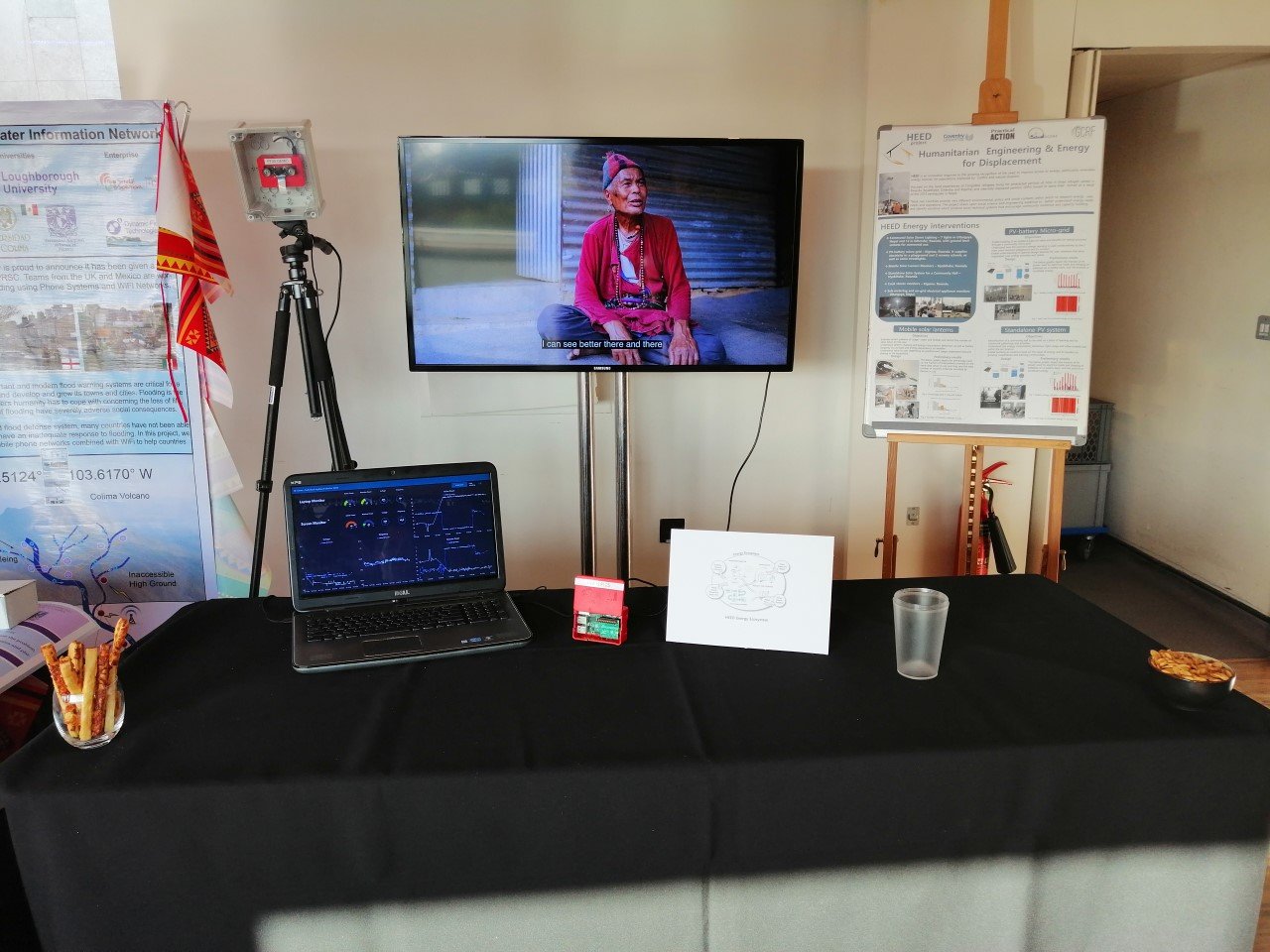
Interface Workshops, 28th November 2019, Kigeme, Rwanda
Following the installation of the micro-grid in Kigeme refugee camp, the HEED team returned to the camp on the 28th of November 2019 to host a workshop to hear from the community on the current and potential use of the micro-grid and to showcase the user interface designs.
The workshop, led by Sandy Robinson and Vijay Bhopal from Scene, along with other team members from Practical Action and Coventry University, was attended by over 20 participants, including Mesh Power, who installed the micro-grid.
The function of the micro-grid installed by HEED in Kigeme Camp is to provide energy via lighting and sockets to two nursery schools and a playground. Although the micro-grid is a sustainable energy solution in delivering sufficient energy to the nurseries, the workshop provided an opportunity for the participants to explore the ways in which energy from the micro-grid can be better utilised.
 As the nurseries are operating seasonally, there are times when the buildings are closed, and therefore using little or no power, however, the micro-grid does not currently have the capacity to add new buildings to the system.
As a result, many participants felt the community would benefit from having interactivity with the micro-grid so they could manage the use of energy more effectively. The discussions illustrated the active engagement of the community in thinking about how best to maximise the use of energy created by the micro-grid.
Directly after this session, Sandy and the team, along with participants, played a game specialised devised to get the participants thinking about energy as a finite resource. Participants had to negotiate and share finite ‘energy tokens’. Vijay commented that:
‘We practised this the day before and simplified it. The participants loved the game and really got it. It was a good way of demonstrating the idea of energy as a finite resource, and it segued into a discussion on how the community can manage the energy resource themselves’.
After lunch and during monsoon style torrential rains, the HEED team divided the participants into two groups to showcase the user interface designs, one lead by Vijay and the other by Jordan Silverman, technical manager at Scene.
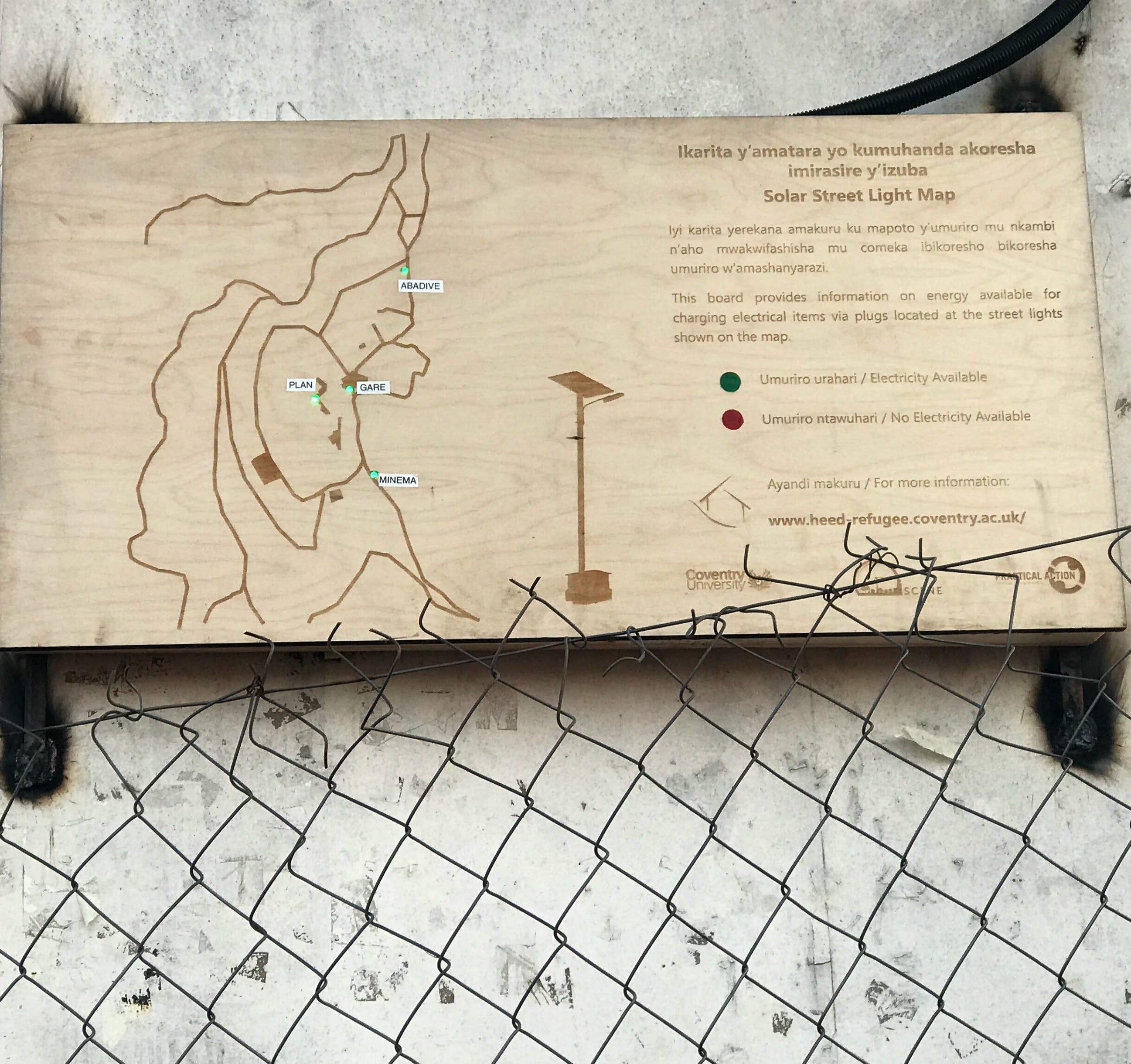
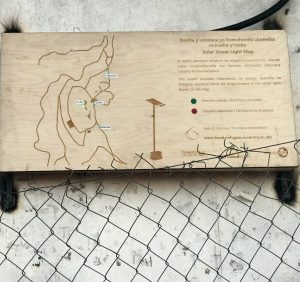
In Gihembe – another refugee camp in Rwanda in which the HEED project is also working – an interface board is already installed that are connected with multi-functional solar streetlights, which show through a series of flashing lights when the streetlight has sufficient power to support additional devices.
In involving the community in thinking about an interface for micro-grid, conversations emerged about governance systems, as well as the interface itself. The insights gained from the sessions demonstrate the importance of incorporating information about the ways in which energy interventions will continue after the project has finished into the design process.
Community Co-design Workshop, 18th October 2019, Kathmandu, Nepal
On Friday 18th October 2019, HEED hosted a workshop in Kathmandu for representatives of the internally displaced communities, who are involved in the HEED project in Nepal. The event was led by Professor Elena Gaura in partnership with project partners Practical Action. The aim of the event was to present some of the lessons learned through the project, particularly in Nepal, which can be applied not only to humanitarian energy projects but also to other off-grid energy access interventions.
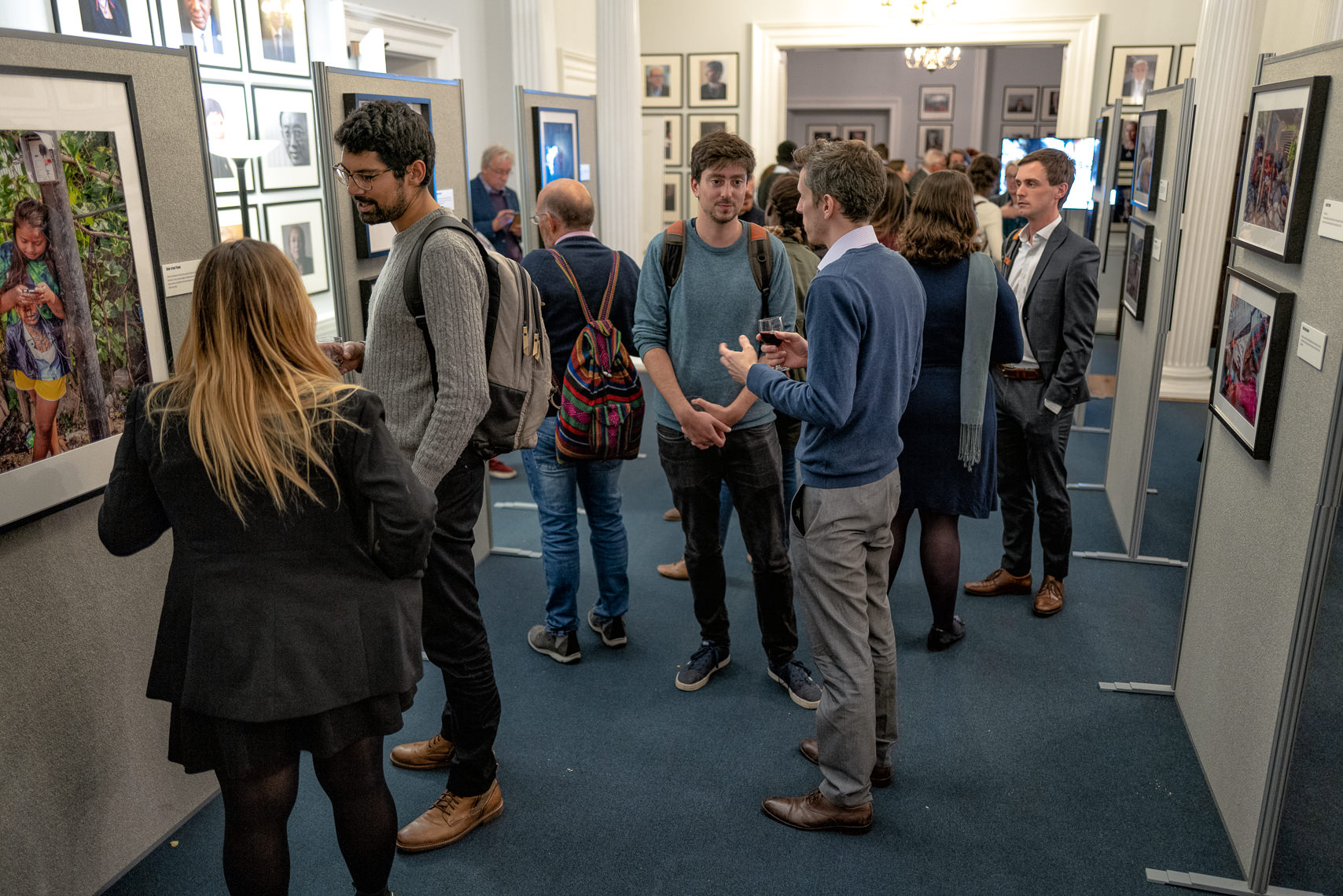
The workshop started with a review of the HEED project, including an opportunity for attendees to view the photo and video exhibition on the journey of the Nepal project. This was followed by a discussion on co-design processes for community energy interventions, for example, the solar streetlights intervention in the camps in Uttargaya, Nepal.
Opening up conversations on the co-design process provides an opportunity for the communities involved in the HEED project to provide feedback on the challenges and best practice, ensuring the development of inclusive, fit-for-purpose and sustainable energy interventions.
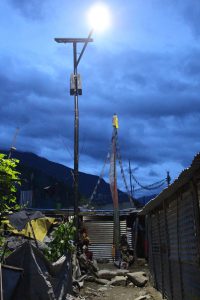 This workshop also allowed Elena and the team to find out more about how self-governance is understood and envisaged by internally displaced communities and the meaning of ‘community ownership’ of energy systems to them.
This will enable the HEED project to develop energy design protocols that centre on community-based needs and aspirations, encouraging and supporting long-term sustainable, community-appropriate and transformative energy solutions.
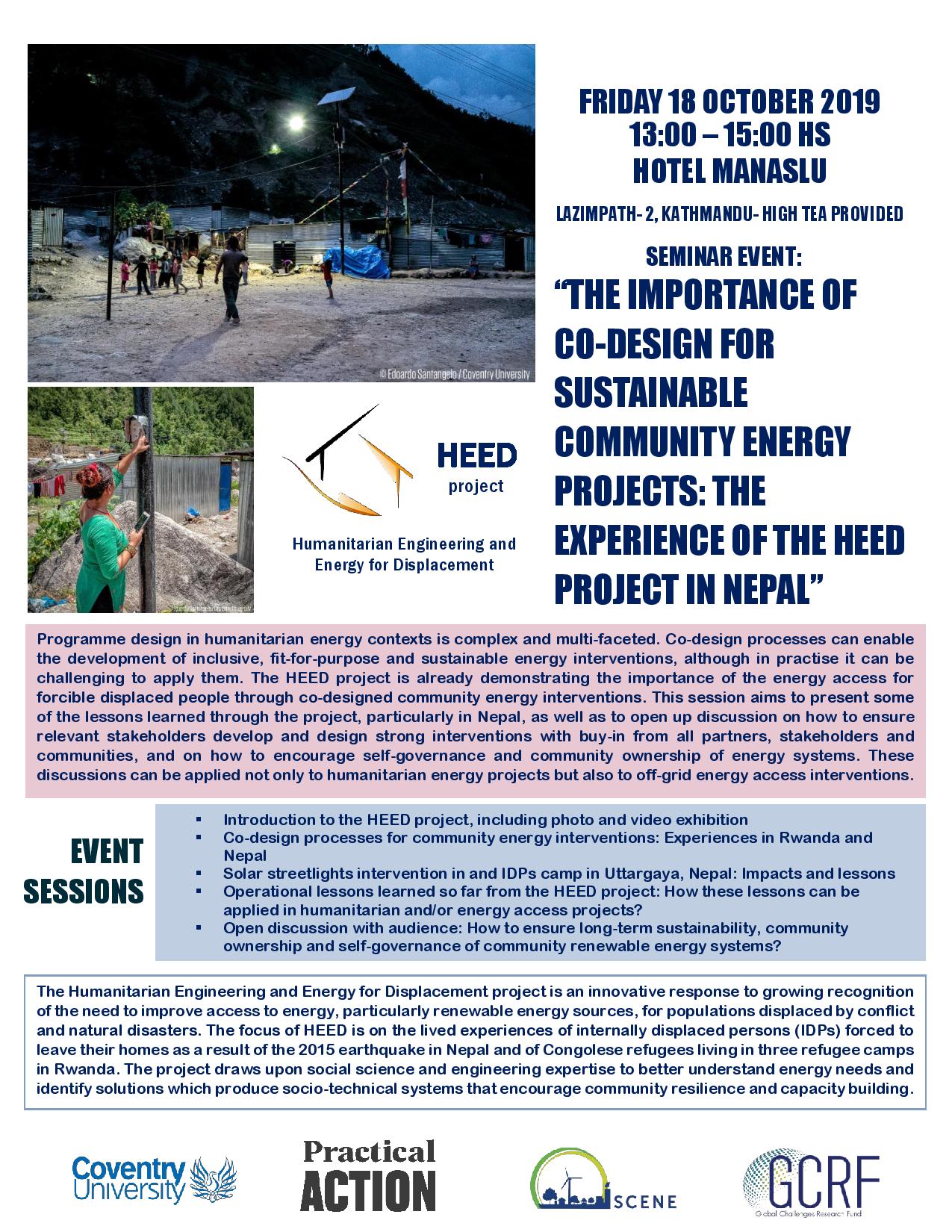 On Friday 18th October 2019, HEED hosted a workshop in Kathmandu for representatives of the internally displaced communities, who are involved in the HEED project in Nepal. The event was led by Professor Elena Gaura in partnership with project partners Practical Action. The aim of the event was to present some of the lessons learned through the project, particularly in Nepal, which can be applied not only to humanitarian energy projects but also to other off-grid energy access interventions.
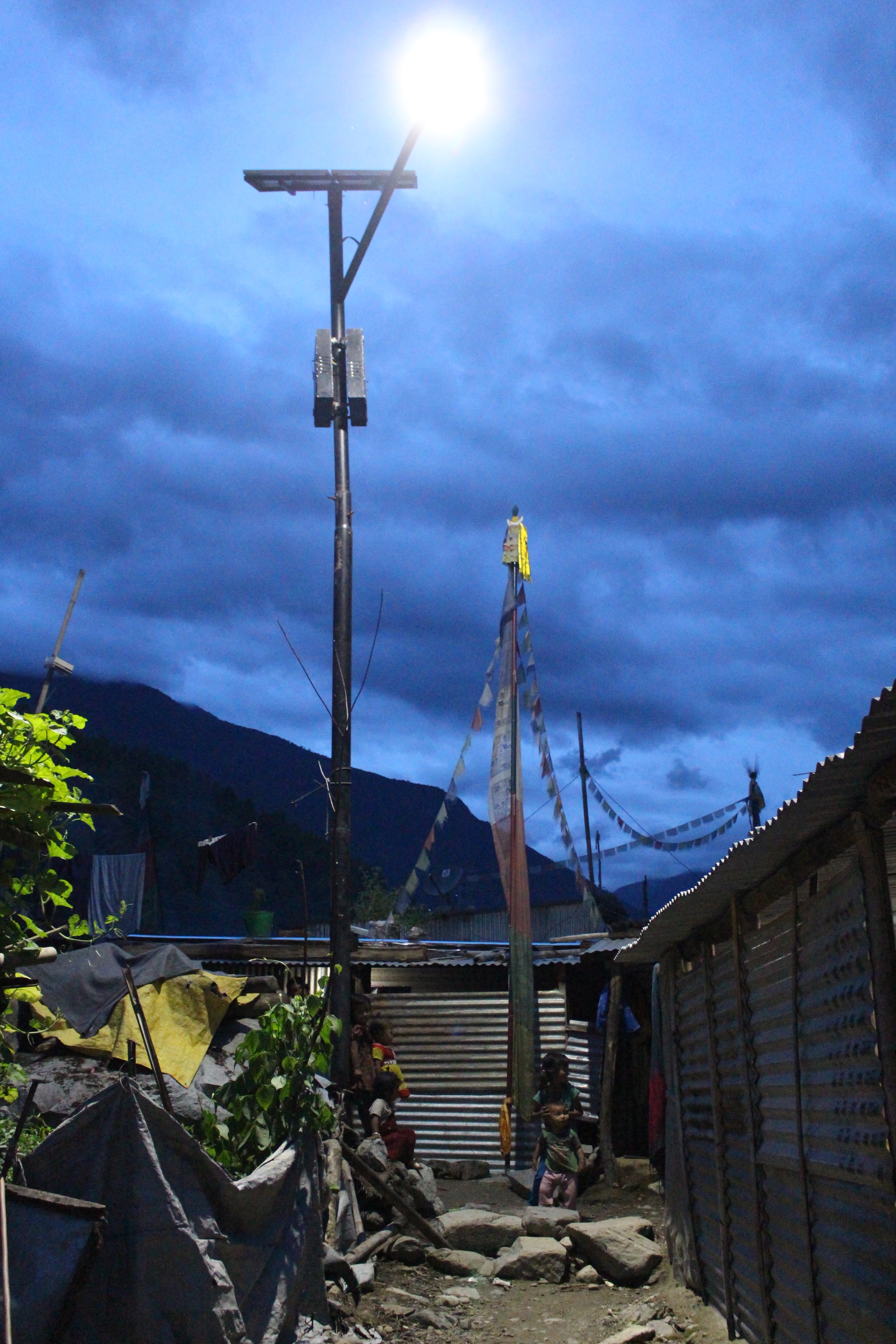 This workshop also allowed Elena and the team to find out more about how self-governance is understood and envisaged by internally displaced communities and the meaning of ‘community ownership’ of energy systems to them.