Blog

  • Update on HEED Conference 1st July 2020, Coventry University, Coventry.

    As the UK governmental response to the COVID-19 pandemic continually evolves, Coventry University is constantly reviewing how best to implement measures that place the well being of the community first. With this in mind, the HEED conference is still scheduled to go ahead on July 1st  but this might change in the next few months. 

    We will endeavour to contact you as soon as possible if we need to postpone the conference and exhibition to a later date.

  • HEED Team members celebrate World Engineering Day for Sustainable Development on 4th March 2020 at Global Grand Challenge Retreat Workshop

    In recognition of their innovative research on projects that contribute to a more sustainable world, Professor Elena Gaura and Professor James Brusey from Coventry University were invited to attend a Global Grand Challenge Retreat Workshop in London on the 3rd-4th of March 2020.

    The workshop, spread over two days, brought together around 60 delegates from The Engineering and Physical Sciences Research Council (EPSRC), Frontier Engineering Projects, Engineering Grand Challenge Projects, and Global Challenges Research Fund (GCRF) projects.

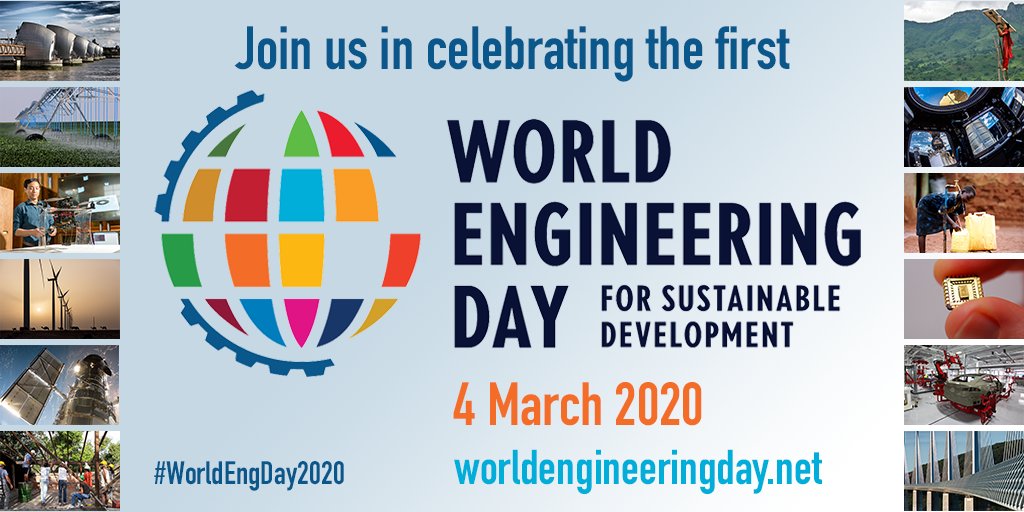
    This event also coincided with the inauguration of World Engineering Day for Sustainable Development, the 4th of March, a designated day to celebrate the role that engineering has in achieving UN Sustainable Development Goals. By setting aside one day a year, UNESCO, with the support of member countries and numerous worldwide engineering organisations, hopes that World Engineering Day for Sustainable Development will raise awareness of projects that are striving for sustainable solutions.
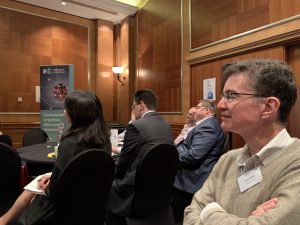
    During the workshop, Elena had the opportunity to talk with delegates about HEED’s work and how it was approaching energy challenges in the displaced context in a multidisciplinary way. She and James also found the time to share with other engineers how HEED is building community capacity and resilience through practical applications that reflect refugees aspirations, as well as needs when addressing energy poverty:

    ‘Coming together with other engineers to discuss and define some of the future grand challenges we face as a global community helped me think about the next direction of the HEED project. Moving forward, I believe that engineers can gain much through socio-technological partnerships, so we can creatively respond to some of the most pressing environmental and humanitarian issues to aid communities to find ethical, sustainable and empowering solutions’.

    With less than 10 years to achieve the UN Sustainable Development Goals, the workshop was a reminder that in prioritising sustainability, engineers and engineering projects play a vital part in achieving the aims of a fairer, more environmentally responsible world.

    Further details about World Engineering Day for Sustainable Development can be found here
  • Professor Ben Sovacool confirmed as Keynote Speaker for HEED Conference July 1st 2020

    We are delighted to announce the keynote speaker at the HEED conference on Wednesday 1st July 2020 is Professor Benjamin K. Sovacool, who will be talking about  ‘Rethinking Energy Poverty and Best Practices for the Governance of Distributed Renewable Energy Access’.

    As Professor of Energy Policy, Director of the Sussex Energy Group, and Director of the Center on Innovation and Energy Demand at the Science Policy Research Unit (SPRU) at the University of Sussex Business School, is renowned for his work on renewable energy and energy efficiency, the politics of large-scale energy infrastructure, and building adaptive capacity to the consequences of climate change. Having received numerous awards and overseen notable international research projects, he is one of the most highly cited global researchers in energy and climate policy.

    Currently, Professor Sovacool is the lead author on the ‘Intergovernmental Panel on Climate Change’s Sixth Assessment Report’ (AR6), due to be published in 2022, and an advisor on Energy to the European Commission’s Directorate-General for Research and Innovation in Brussels, Belgium.

    Along with Professor Sovacool, other presenters at the HEED conference include UNITAR, Shahnaz Khan from 60 Decibels, a not-for-profit social impact measurement company and Dr Nathan Johnson, Director of The Laboratory for Energy And Power Solutions (LEAPS).

  • HEED Newsletter Now Out!

    The January issue of the HEED Newsletter is now available, featuring:

    ‘The Importance of Co-design for Sustainable Community Projects’

    As the HEED project concludes in Khalte, Nepal, Dr Chas Morrison reports back on community engagement with energy interventions and what it means for future projects.

    ‘Rethinking Energy Economies for Refugees’ Sarah Rosenberg-Jansen, a researcher on Humanitarian energy, based at the Refugee Centre, Oxford University, UK on shifting approaches to energy economies in the humanitarian context.

    Operations, Opportunities and Ownership: The Micro-Grid, Kigeme, Rwanda

    Coventry University’s Dr Jonathan Nixon, team leader on the HEED micro-grid intervention, reflects on community responses to transferring ownership of the micro-grid from the project to the people in Kigeme Camp, Rwanda.

    We welcome contributions and feedback to the Newsletter so we can offer a forum that generates lively discussion, thought-provoking insights and is making valuable connections.

  • Save the Date! HEED Conference: Wednesday, 1st July, 2020 9.30 -5.00 Coventry University, UK

    HEED is hosting a free one day conference on Wednesday, 1st July 2020, 9.30-5.00. The conference aims to share and debate HEED’s findings on designs and community co-design processes and planning tools for sustainable energy interventions, as well as the data and evidence base built during the project.

    The programme includes discussion on methodological approaches to researching energy in a humanitarian context, the role of displaced communities in devising energy solutions that are fit for purpose and sustainable, and emerging community ownership models for energy assets

    For tickets please follow the link 

  • The HEED project features in article in ‘Nature Energy ‘

    Sarah Rosenberg-Jansen

    Sarah Rosenberg-Jansen, a team member of the HEED project, who is based at the Department of International Development at the University of Oxford, discusses the work of HEED in a recently published article in Nature Energy. In highlighting the value of ‘inclusive design’, which engages refugee communities, humanitarian agencies and the private sector in the assessment, design and delivery, the article contends this could aid the implementation of sustainable energy for refugees.

    The article can be accessed online for free till January 2020 here and for Sarah’s recent post on ‘ Rethinking Energy Economies for Refugees’ here.